A business buys a monthly package of reels and posts. The calendar fills up, the designs look polished, and everything goes out on time. At the end of the month, the report lists what was published. But the owner still cannot answer: “Are we reaching the right people? Is this helping them choose us?”
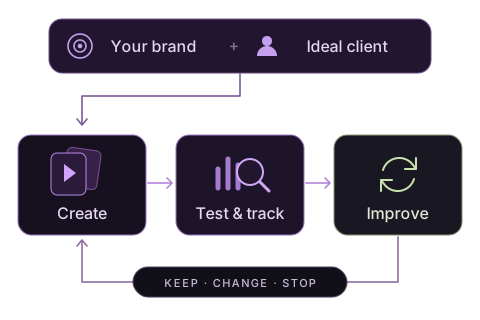
Delivery is only part of the job.
A fixed package can make budgets and responsibilities clearer. Regular publishing can also help a brand show up consistently. The gap appears when the content count becomes the only definition of success.
A completed calendar tells you the work was delivered. It does not, by itself, tell you whether the message fits your brand, attracts suitable customers or helps your business. Those questions need a strategy and a way to review progress.
Start with your position and your ideal client.
My starting point is your business: what you offer, who it is for, why they should choose you and what you can credibly promise. Content should make that position easier to understand.
Then I look at the people you want to reach. What are they trying to achieve? What makes them hesitate? What do they need to understand before enquiring? Customer conversations, common sales questions and existing enquiry feedback help turn assumptions into useful content ideas.
From there, I plan content around a clear job: explain a problem, answer an objection, show relevant proof or help someone take a next step. The topic and message come before the choice of reel, carousel or post.
Give each test a question to answer.
I build content around a working idea we can test. For example: “Explaining our process may help suitable prospects feel ready to enquire.” We choose the message, format, intended action and evidence to review before publishing.
Hypothetical example / Not client results
An interior design studio wants homeowners planning a full renovation. A beautiful-room montage may attract attention, but it does not explain who the service suits.
A useful test could be a short walkthrough of the studio’s renovation process, with a clear invitation to read its project guide. The studio would then review guide visits and the relevance of resulting enquiries—not just how many people watched.
I test focused variations of the message or format, keeping the other conditions as similar as practical. Organic content is not a perfectly controlled experiment: timing, distribution and audience can change. A promising pattern is something to investigate and repeat, not proof from a single post.
Track progress through the customer journey.
The measures should match the content’s job. An introductory post and a consultation invitation should not be judged by exactly the same yardstick.
- Attention: reach, viewing behaviour and available audience information. Are there signs we are reaching people who fit the offer?
- Interest: relevant replies, saves and visits to the service or guide. What are people trying to understand?
- Action: qualified enquiries, booked conversations and follow-up outcomes. Is the interest progressing?
- Business: customers and sales, where reliable records are available. Which enquiries became a good fit?
I use tagged links, website analytics and enquiry feedback where available, then agree on a review rhythm that fits the buying journey. Tracking has gaps, and one post rarely explains an entire sale. The aim is a more useful picture for decisions.
Each review ends with a next move: continue a promising idea, improve an unclear message, stop a weak approach or run a better test. If interest is strong but suitable enquiries are missing, we also inspect the offer, website and follow-up. More content may not be the next thing the business needs.
Before buying your next content package, ask:
- Who is this content for, and what should they understand about our brand?
- What business objective will the content support?
- What are we testing, and what action should people take?
- How will we track relevant interest and enquiry quality?
- When will we review what worked and change the plan?
Those answers give the calendar a purpose. My growth strategy work connects positioning, content and measurement so that each round of publishing informs the next.
Read next